The sixth of February we went on our field trip to the City
of David and Hezekiah’s Tunnel. It was a chilly day, and we had to leave the
Center at 7:30 in the morning, but we made the 15 minute walk to the oldest
part of the city in good spirits. When we arrived we sat through an
informational video. Most of the “informational videos” we watch at these sites
are really corny and seem outdated. This video, however, was great. It was in
3D (and good 3D, at that… not the
silly red and blue glasses kind), and pretty exciting.
 |
| On our way to City of David (quick note: I didn't bring my camera on this field trip, for fear of it falling into the water, so all pictures are stolen from Huntsy (aka, Papa Hunts, aka Dr. Huntsman) |
After the video we were pretty psyched for seeing the city.
We walked through the remains of the City of David, which have been taken care
of fairly well. They were more extensive than I thought they would be. They
looked pretty similar to the multitude of other ruins we see on a regular
basis, but a few of the places we saw were places that Christ actually would
have walked. The added significance definitely brought these a notch above the
regular rocks. :)
 |
| Our OT class, with part of the City of David in the background |
After the ruins, we proceeded to Hezekiah’s Tunnel. The
tunnel is about 1750 feet long, and at sometimes only three feet or so wide. There’s
anywhere from six inches to two and a half feet or so of water running through
it at all times as well. Being a cold day (for here, at least…) we weren’t
particularly looking forward to drenching ourselves in water. However, once we
got in, we found it to be way more fun than we were expecting. We pushed thoughts
of flash floods out of our minds, and wandered through the channel, which was
manmade in under Hezekiah's rein, around 700 BC. It's mentioned in 2 Kings 20:20: "And the rest of the acts of Hezekiah, and all his might, and how he made a pool, and a conduit, and brought water into the city, are they not written in the book of the chronicles of the kings of Judah?"
For the first five minutes everyone had their headlamps
on and flashlights out, but one by one, we all extinguished our lights in favor
of complete and utter black. This prompted a lot of sudden grabbing of arms,
and subsequent screaming, which added to the creepy ambiance. Of course there
was also plenty of bumping into the person in front of you, uttering apologies,
and then going slow with your arms stretched ahead of you to avoid the problem,
only to realize you’re now 20 feet behind them. In any case, it was quite the
thrill, and we all had a great time. By the end, with our pants soaked
three-quarters of the way up our legs, we didn’t even realize we were cold.
 |
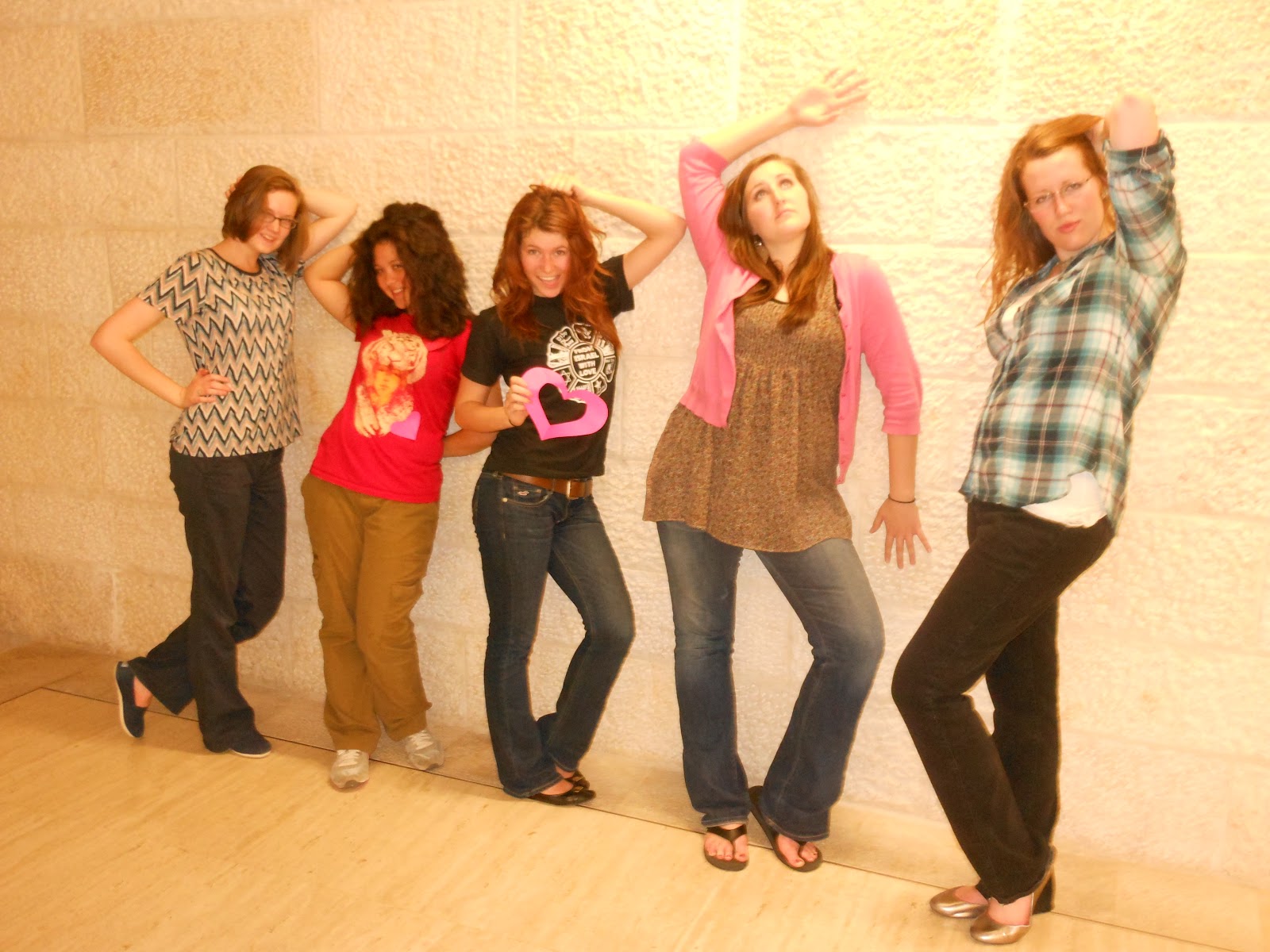
| After coming out of Hezekiah's tunnel--notice how soaked (and yet how happy) we all are. |
 |
| Sitting on the steps by the pool of Siloam |
We finished off the day at the Pool of Siloam, where Jesus
sent the blind man to be healed in John 9. This is one of the few places
where we can actually say, “I walked where Jesus walked.” A lot of the city of
Jerusalem is built up ten or fifteen feet from where it would have been two
thousand years ago, so though we’re walking “close to” or “directly above”
where Jesus walked, it’s not quite as effective as sitting on some steps, singing
hymns, knowing that Jesus had sat where you were. It’s mind-blowing, actually. Sometimes
I think it’s hard to realize that Jesus was, at one time, a man. Or at least
for me it is. We read stories about Him countless times, sing songs praising
Him, and pray in His name. But to take time to actually picture Him, walking
around, just like you or I—that’s a powerful image. He’s not just some
idealized character. These stories took place, on Earth. They really happened.
He really came. And thank God for that.